Intraoperative Neuromonitoring - Information for patients and families
What is Intraoperative Neuromonitoring?
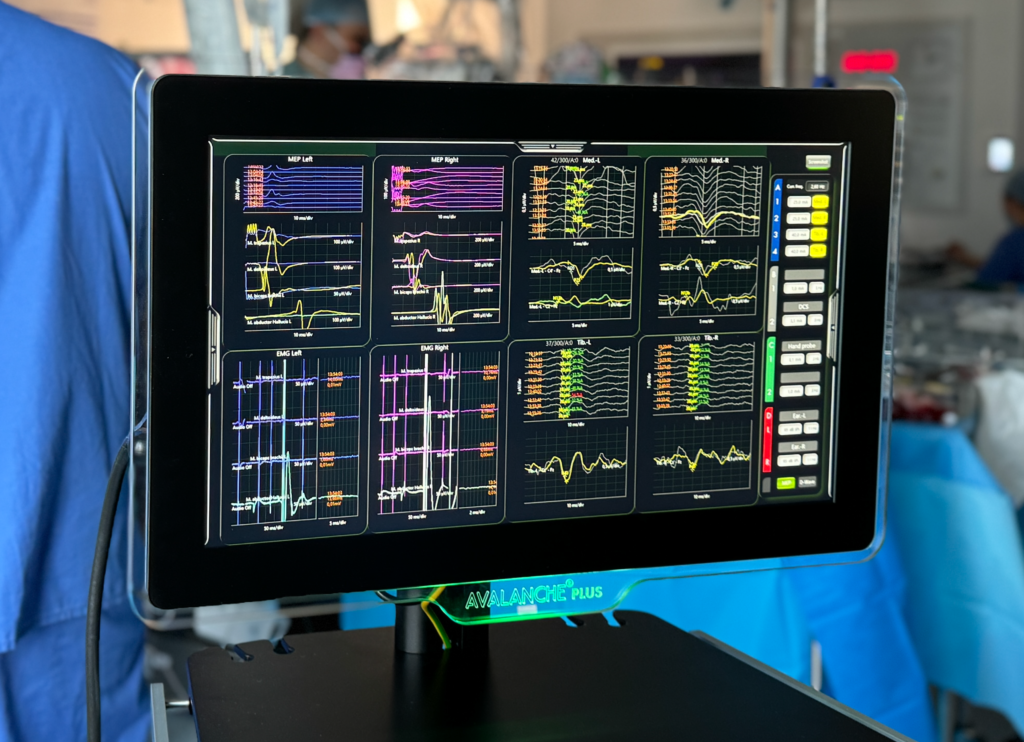
During certain operations involving the brain, spine, or important nerves, there is a risk of injury to the nervous system. Intraoperative neurophysiological monitoring (IOM) is a specialised technique used during surgery to help protect these structures. A trained neurophysiologist monitors electrical signals travelling through the nervous system while the operation is taking place. If any significant change occurs, the surgical team can be alerted immediately. This provides an additional layer of safety during complex surgical procedures.
Why is monitoring used?
Intraoperative neuromonitoring may be used during procedures where important neurological structures are at risk, helping the surgical team monitor nerve function and identify potential changes during surgery. This is particularly relevant when operating close to structures such as:

What happens during monitoring?
While you are under anaesthetic, small recording electrodes are placed on the skin and, where required, sterile single-use needle electrodes may be placed into certain muscles. These electrodes allow specialists to record electrical signals from the nervous system throughout the operation. For some types of monitoring, brief electrical stimulation may be delivered in order to assess nerve and spinal cord function. All electrodes used are sterile and single-use.
Will I be aware of the monitoring?
No. Monitoring takes place while you are under general anaesthetic and you will not be aware of the monitoring during the procedure.
Risks associated with neuromonitoring
Intraoperative neuromonitoring is widely used and considered a safe technique. Electrical stimulation used during monitoring may occasionally cause brief muscle contractions while you are under anaesthetic. In rare cases this can result in minor tongue or lip biting. To reduce this risk, protective bite blocks are routinely placed in the mouth during surgery. Serious complications related to neuromonitoring are extremely uncommon.
Who performs the monitoring?
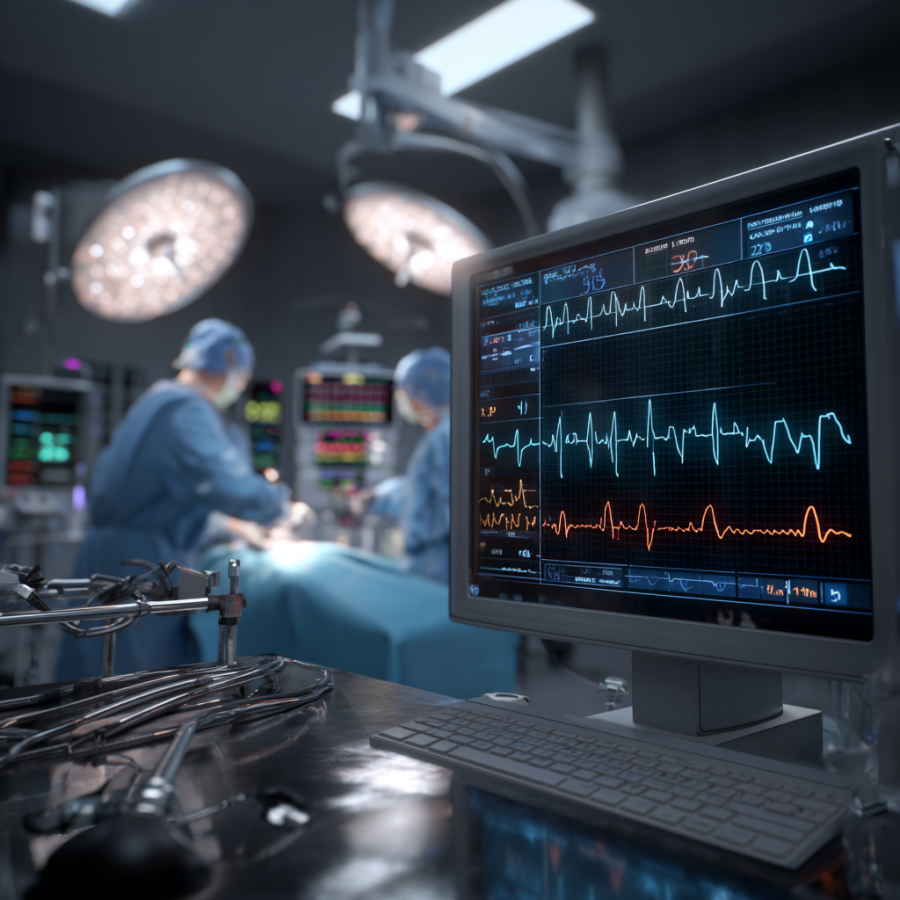
Monitoring is carried out by highly specialised physiologists with specific training in intraoperative neuromonitoring. AxIOM Neuromonitoring staff work closely with the surgical and anaesthetic teams throughout the operation.
Care
Confidentiality and patient information
Professional standards
Questions, feedback or concerns
We are PROUD TO WORK WITH THESE INSTITUTIONS